How to Get Reliable Internet in India with eSIM Plans
8/8/2026
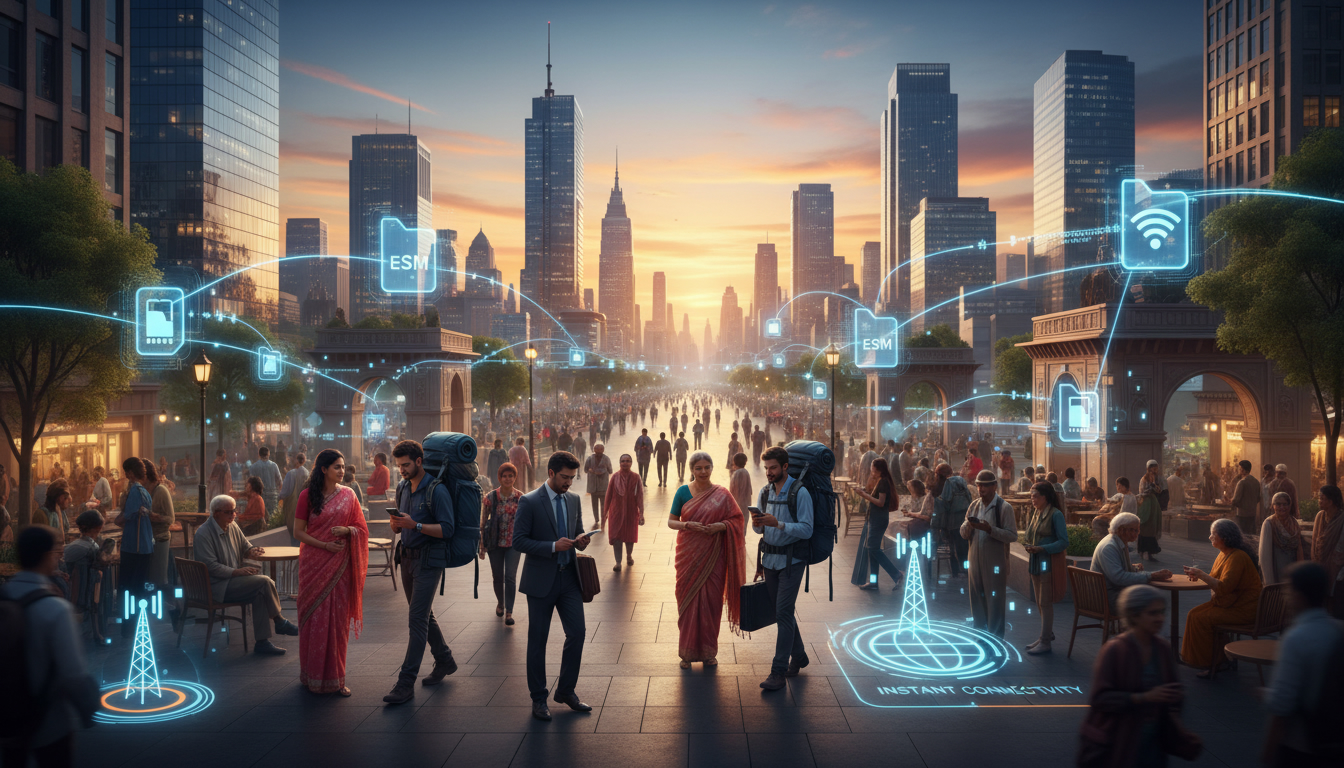
In short, what you'll discover in this article: Explore the current landscape of internet in India, including key statistics, infrastructure, user behavior, and challenges. Learn about affordable options like eSIM data plans for travelers and the future of connectivity in this rapidly evolving market.
1. Introduction
1.1 Why "Internet in India" Is an Important Topic Today
The internet in India has transformed dramatically over the past decade, becoming a vital part of daily life for millions. Understanding its growth and challenges is essential for grasping how digital inclusion shapes the country's economy, education, and social fabric.
With India now boasting one of the largest internet user bases globally, exploring this topic sheds light on both opportunities and obstacles faced by its population.
1.2 Article Objectives and Key Questions Addressed
This article aims to provide a comprehensive overview of internet access in India. It covers:
- Current internet penetration and usage statistics
- Infrastructure and technologies supporting connectivity
- Cost, quality, and accessibility of internet services
- User behavior and popular online activities
- Government policies and regulatory environment
- Economic and social impacts of internet expansion
- Challenges limiting broader adoption
- Future trends and practical recommendations
For travelers seeking reliable connectivity, we also discuss convenient options like eSIM data plans tailored for India.
2. Key Statistics and Current Overview
2.1 Number of Users and Penetration Rates (Urban vs Rural)
India has witnessed a remarkable rise in internet penetration, growing from about 15% to nearly 70% of the population within a decade, mainly driven by mobile phone adoption. As of mid-2025, there are over 1 billion internet subscribers nationwide.
Urban areas enjoy higher penetration rates compared to rural regions, where approximately 46 out of every 100 people have internet access. This gap highlights ongoing challenges in reaching remote communities.
2.2 Device Distribution (Mobile vs Fixed) and Language Usage
The majority of Indian internet users access the web via mobile devices rather than fixed connections. Smartphones dominate due to affordability and widespread network coverage.
Language diversity is significant; while English is common online, many users prefer content in regional languages such as Hindi, Bengali, Tamil, and Telugu, influencing digital content strategies.
2.3 Recent Trends: Growth and Investments
Recent years have seen heavy investments in expanding 4G and emerging 5G networks alongside fiber optic infrastructure upgrades. The surge in affordable smartphones combined with government initiatives like Digital India has accelerated digital adoption.
Additionally, satellite internet projects are being explored to enhance rural connectivity.
3. Infrastructure and Available Technologies
3.1 Mobile Networks (4G/5G): Coverage and Deployment
India’s mobile network landscape is dominated by 4G LTE technology with extensive coverage across urban centers and many rural areas. The rollout of 5G networks began recently in major cities, promising faster speeds and lower latency that will support advanced applications like IoT and AI services.
3.2 Fixed Networks: Fiber Optic, Cable, DSL
Fixed broadband options include fiber optic connections that offer high-speed internet primarily in metropolitan regions. Cable and DSL services remain available but are less prevalent due to infrastructure limitations outside cities.
3.3 Interconnection and National Backbone (Backbone, Data Centers)
India has developed a robust national internet backbone supported by multiple data centers distributed across regions to ensure reliability and reduce latency. These facilities are critical for handling increasing data traffic from both domestic users and international exchanges.
3.4 Alternative Solutions: Satellites and Community Networks
To bridge connectivity gaps in remote areas, satellite internet initiatives have been launched alongside community network projects that empower local groups to build affordable access points using shared infrastructure.
4. Access, Cost, and Quality of Service
4.1 Pricing, Plans, and Economic Accessibility
Internet pricing in India is among the lowest globally due to intense competition among providers like Jio, Airtel, and Vi. Affordable prepaid plans are widely available for both mobile data and fixed broadband users.
For travelers or short-term visitors, eSIM data plans offer convenient options without roaming fees or physical SIM swaps.
4.2 Quality Measures: Speed, Latency, Stability
Average mobile broadband speeds vary but generally meet everyday needs such as streaming or video calls. Urban areas enjoy better latency and stability compared to rural zones where infrastructure constraints can cause slower or intermittent connections.
4.3 Last-Mile Issues and Rural Cases
The “last mile” problem—connecting end-users to main networks—remains a significant hurdle especially in rural India due to geographic challenges and limited investment incentives.
5. User Behavior and Internet Usage Patterns
5.1 Main Online Activities (E-commerce, Streaming, Education, Government Services)
Popular activities include online shopping through platforms like Flipkart or Amazon India, video streaming on YouTube or OTT services such as Hotstar, digital education tools for students, and accessing government portals for services under Digital India programs.
5.2 Adoption by Segments: Age, Gender, Geography
Younger populations show higher adoption rates with frequent social media use; however disparities exist by gender with women having lower access levels on average. Urban residents enjoy broader service availability compared to rural counterparts.
6. Public Policies and Regulation
6.1 Key Programs (Digital India, Subsidies)
The Digital India initiative aims to improve digital literacy, expand broadband infrastructure nationwide, and promote e-governance services to foster inclusive growth.
6.2 Telecom Regulation and Net Neutrality Measures
India’s telecom regulator ensures fair competition among providers while upholding net neutrality principles that prevent discriminatory treatment of online content.
6.3 Data Protection Law and Privacy
Recent legislation focuses on protecting user data privacy amid growing concerns over cybersecurity threats as more citizens engage online.
7. Security, Governance, and Internet Interruptions
7.1 Notable Incidents and Impact of Internet Shutdowns
Periodic internet shutdowns occur due to security concerns or political unrest impacting millions who rely on uninterrupted access for communication.
7.2 Cybersecurity Threats, Fraud Prevention, User Protection
Efforts are underway to combat cybercrime through awareness campaigns alongside technological safeguards implemented by service providers.
8. Economic and Social Impacts
8.1 Contribution to Digital Economy and Job Creation
The expanding internet ecosystem fuels e-commerce growth, digital payments adoption, startup innovation hubs, creating millions of jobs directly or indirectly linked to online activities.
8.2 Education, Health Services, Digital Inclusion
Internet access enables remote learning opportunities especially during crises like the COVID-19 pandemic while telemedicine services improve healthcare reach in underserved regions.
9. Challenges Hindering Wider Adoption
9.1 Regional and Linguistic Disparities
Significant gaps remain between states regarding infrastructure quality; language barriers also limit effective content delivery for many users.
9.2 Infrastructure Gaps and Funding Constraints
Building reliable networks in difficult terrains requires substantial investment which is often lacking outside profitable urban markets.
9.3 Digital Skills Gap and Literacy Levels
Limited digital literacy restricts effective use of available technologies among large segments of the population needing targeted training programs.
10. Future Trends and Opportunities
10.1 Role of 5G, AI, Satellite Internet Technologies
The next wave includes widespread adoption of 5G enabling smart cities applications; AI-driven services improving user experience; satellite-based internet expanding coverage beyond terrestrial limits.
10.2 Possible Scenarios Over the Next Five to Ten Years
India could achieve near-universal connectivity with enhanced speeds supporting new economic sectors while addressing inclusion challenges through innovative policies.
11. Practical Recommendations (For Policymakers, Businesses & NGOs)
11.1 Investment Priorities & Policy Suggestions
Focus on expanding rural infrastructure with public-private partnerships; incentivize affordable device manufacturing; strengthen regulatory frameworks supporting competition.
11.2 Actions To Improve Inclusion (Training & Local Content)
Promote digital literacy campaigns targeting marginalized groups; develop multilingual content tailored for diverse communities; support community networks as sustainable models.
12. Case Studies / Concrete Examples
12.1 Successful Initiative in Rural Areas
Community Wi-Fi projects powered by local entrepreneurs have demonstrated how affordable shared access can boost connectivity where commercial providers hesitate to invest.
12.2 Notable Public-Private Partnership Project
Collaborations between government bodies like BharatNet with telecom operators have accelerated fiber deployment connecting thousands of villages nationwide.
13. Conclusion
In summary, internet in India has grown rapidly thanks to mobile technology expansion but still faces challenges related to rural access disparities and digital literacy gaps. Affordable options such as eSIM data plans provide convenient connectivity solutions for travelers seeking seamless online experiences across the country without roaming fees or SIM swaps—readers can explore these offers on indiasim.com. Continued investments in infrastructure alongside inclusive policies will be key to unlocking India's full digital potential over the coming decade.
For travelers looking for hassle-free connectivity during their visit to India, consider exploring competitive eSIM data plans from providers like Yesim offering up to 20% off with promo code MYBESTSIM20, or LinkeSIM with a 5% discount using code MYBESTSIM—these deals are highlighted by MyBestSim’s trusted comparison platform ensuring you stay connected affordably from Delhi to Goa without roaming hassles (best eSIM options).
FAQ
What is the current internet penetration rate in India?
As of mid-2025, nearly 70% of India's population has internet access, with over 1 billion subscribers nationwide. Urban areas have higher penetration rates compared to rural regions, where about 46% of people are connected.
How widespread is 5G network coverage in India?
5G networks have recently started rolling out in major Indian cities, offering faster speeds and lower latency. However, 4G LTE remains the dominant technology with extensive coverage across urban and many rural areas.
What affordable internet options exist for travelers in India?
Travelers can use eSIM data plans that provide convenient, cost-effective connectivity without roaming fees or physical SIM swaps. Providers like Yesim and LinkeSIM offer competitive plans with discounts through trusted platforms.
What challenges limit internet access in rural India?
Rural areas face infrastructure gaps, geographic difficulties, and limited investment incentives. The last-mile connectivity problem and lower digital literacy also hinder broader adoption outside urban centers.
How does language diversity affect internet usage in India?
Many users prefer regional languages such as Hindi, Bengali, Tamil, and Telugu over English. This diversity influences digital content strategies to ensure accessibility and engagement across different linguistic groups.

Anjali Rao
Anjali is a travel and technology writer who has criss-crossed India by train, plane and rickshaw. At India eSIM she tests travel data plans on Jio, Airtel and Vi and explains how visitors can stay online affordably from Delhi to the backwaters of Kerala.